 Holes in the Roof
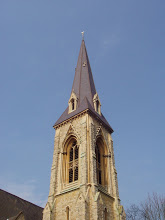
In the past fortnight you might have noticed that the church has yet again had scaffolding put up. Having a Victorian slate roof on a listed building can get expensive. We are so lucky in this church to have generous people who give of their time and money to allow us, so far, to mend every hole that has appeared and, indeed, to replace whole sections of the roof when that has become necessary.
Welsh Slate
The slate our roofers use comes from Penrhyn quarry at Bethesda in North Wales, one of the few remaining in Wales, and using very different techniques and working conditions from the past. Local museums, such as the Slate Museum at Llanberis, give an insight into the very tough conditions under which the men historically worked and the industrial disputes that arose. This included the longest labour dispute in British history, a three-year strike beginning in 1900, the bitterness from which I remember lingering into my own youth.
My mother’s family were for generations quarrymen in that and nearby quarries. It was my grandfather who managed to escape the harsh way of life by training as a teacher and moving to London, though he always missed his beloved Wales.
A Better Way of Life
If you go to another of the slate museums, at Blaenau Ffestiniog, you can enter one of the huts where the men sheltered from the mining blasts and gathered to eat their lunch. You are shown the pot that was passed round weekly for each man to put in a penny from his meagre wages. In the late nineteenth century those pennies went to found Bangor University because, the quarrymen knew, education was the only way out to a better life. My grandfather studied physics there and, many decades later, that is the university I chose for my own first degree.
I can’t imagine how my ancestors would feel to know that their descendent, a woman, would one day be educated beyond their wildest dreams and working in a beautiful building underneath the same stones that they were quarrying. It reminds me how little we think about where the raw materials of the things we own come from, still! Rebecca Lloyd