 St Cecilia’s Day
Once when visiting Rome, we were encouraged to visit the ancient catacombs. These are underground rooms and passages used for burial in the times of ancient Rome. Because the Romans were frightened to go down there, early Christians – still persecuted for their faith, had no such fear and they used the catacombs for secret worship.
In hushed tones our guide said, pointing to a niche full of ancient and holy graffiti, that this was the place where St Cecilia’s body had been found. Nothing much is known about this early Christian martyr, but since being exhumed and re-buried in the church that bears her name she has become intrinsically linked with music, and, being frequently depicted as playing the organ, specifically with church-music.
Music and singing is one of the oldest components in the worshipping of God. Even when everything is against you, even – and perhaps especially – when your community is being persecuted, you can still ‘sit in a strange land’ and sing, be it ‘by the rivers of Babylon’ or be it by experimenting with a ‘new song to Lord’ especially composed to meet the new cultural challenges of the community in which you find yourself.
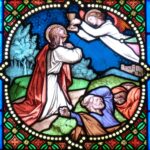
Even in his darkest hour together with his rather fickle disciples Jesus is described as singing a hymn (Matthew 26,30). Music and singing can give us courage, it can change our mood and perhaps it can even transform us a little.
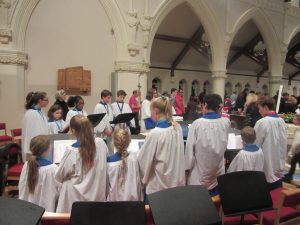
How appropriate therefore that in the week of St Cecilia’s day (22 November) our choir is back from their half-term break. We pray for them today as they embark on a busy season of singing climaxing in our busy Christmas season.
Bernhard Schunemann
19 November 2017