John Bunyan
In the Church of England we are lucky in that we honour Christian saints not only from the catholic and orthodox traditions, but also non-conformist ones.
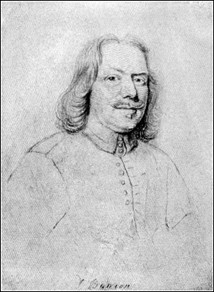
On Saturday (30 August) we remember John Bunyan, most famously loved for his Hymn ‘Who would true valour see… to be a pilgrim’, number 621 in our hymn book. He was a barely educated wandering odd-job man in the 17th century. He educated himself to read and write by reading the Bible. Because he was a non-conformist and an early founder of Baptist churches he spent a considerable part of his life in prison, especially after the restoration of Charles II, when non-conformity was again not tolerated.
During his time of confinement in prison in Bedford he wrote “Pilgrim’s Progress”. This is a prose allegory of the pilgrimage of ‘Christian’ with his companions: first Faithful and then Hopeful. The book charts a journey from the City of Destruction to the Heavenly City, encountering en route such hazards as Slough of Despond, the Hill of Difficulty, Doubting Castle, By-Path Meadow and Vanity Fair.
The book enjoyed huge success and during the remaining ten years of his life he saw ten editions printed. It eventually became the most widely read book in the English language after the Bible and it greatly influenced subsequent English writers. The Pilgrim’s Progress is now generally considered one of the finest allegories in all of English literature – not just among spiritual writings – and it has been translated into numerous languages.
Bernhard Schunemann
24 August 2025