Christ is Risen! Χριστὸς ἀνέστη! Христос воскресе! لمسيح قام! …
I was privileged to spend Easter this year in the orbit of the orthodox church, and not only that I also visited Armenia, the oldest Christian country on earth where some church buildings go back to AD301, when Tiridates III of Armenia proclaimed Christianity as the national religion of his country.
In the orthodox world faith and everything that flows from it is rooted in the resurrection.
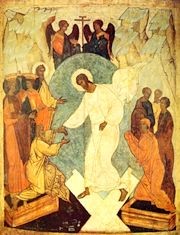
In iconography, according to the Byzantine iconographic type, the Resurrection — as early as the eighth century — is portrayed primarily by the Descent of the Saviour into Hades. Our Lord is depicted pulling up Adam and Eve out of their sepulchres while trampling upon the gates of Hades. In the background stand the Old Testament patriarchs, prophets, and other figures, including John the Forerunner, who announced Jesus’ advent.
In the Bible this deep relevance of Christ’s resurrection for those who lived before Christ, and by extension to those who never had the opportunity to encounter love for Christ during their lifetime here on earth, is captured in this otherwise obscure passage in 2 Peter 2, 18-21 “For Christ also suffered for sins once for all, the righteous for the unrighteous, in order to bring you to God. He was put to death in the flesh, but made alive in the spirit, in which also he went and made a proclamation to the spirits in prison, who in former times did not obey, when God waited patiently in the days of Noah, during the building of the ark, in which a few, that is eight people, were saved through water.”
Bernhard Schunemann